
With the increasing popularity of new energy vehicles,home ev chargerandpublic charging station have become devices we use every day. Many car owners encounter this problem when charging: “The charging gun feels hot to the touch, and the charging station casing also gets warm or even hot. Is this normal?” This article will provide a professional and comprehensive analysis of this issue.
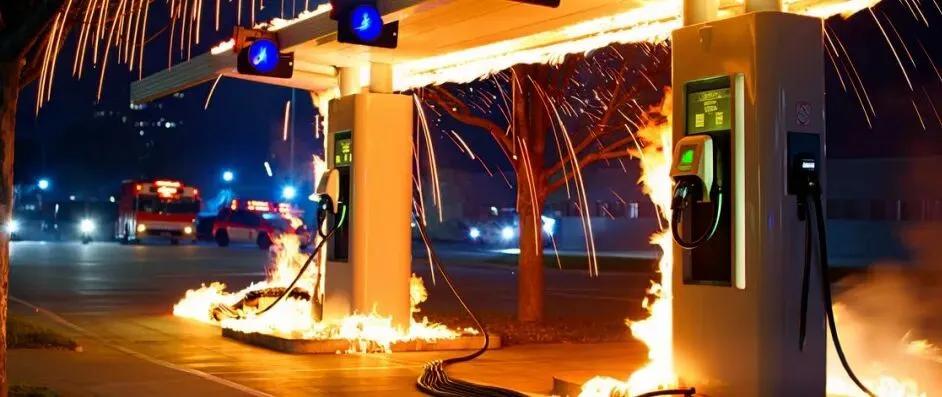
I. Conclusion: Overheating ≠ Danger, but Excessive Overheating is the Hidden Danger
Whether it’sDC fast charging or AC slow charging, cables and connectors will generate resistive heat under high current. Just like phone chargers and laptop power adapters, heat generation is a physical phenomenon, not a malfunction.
However, if the temperature rise exceeds a reasonable range, it indicates a potential problem: such as insufficient copper cross-sectional area in the cable, poor solder joints, or an aging charging nozzle. These factors can cause a rapid increase in localized heat, potentially leading to burning, breakdown, or even fire.
II. Why do charging devices generate heat?
Whether it’s anAC charging stationor aDC fast charging station, both need to handle a continuous large current during operation. Conductors have resistance, and heat is generated when current flows through them, as shown in the formula: P = I² × R
When the charging current reaches 32A (7kW home charging station) or even 200A~500A (DC fast charging Pile), even extremely low resistance can generate considerable heat. Therefore, moderate heat generation is a normal physical phenomenon and does not fall under the category of a malfunction.
Common sources of heat include:
- Resistance heat of the charging wires themselves
- Contact voltage drop at the charging head
- Heat dissipation from internal power components
- Additional heat from ambient temperature and sunlight
Therefore, it is common for users to feel “warm” or “slightly hot” while charging.
III. What constitutes normal temperature rise?
Industry standards (such as GB/T 20234, GB/T 18487, QC/T 29106) have specific requirements for the temperature rise ofcharging equipment. Generally speaking:
1. Normal Range
Surface temperature 40℃~55℃: Normal temperature rise, safe to use.
55℃~70℃: Slightly high but still within acceptable limits in many scenarios, especially for high-power DC charging in summer.
2. Range requiring caution
>70℃: Approaching or exceeding the standard’s allowable temperature rise, charging must be stopped and the device inspected.
The following are considered abnormal phenomena:
- Softening of rubber or plastic
- Burnt odor
- Discoloration of the metal terminals on the charging head
- Localized areas at the connector becoming noticeably hot to the touch or even untouchable.
These phenomena are often directly related to “abnormal contact resistance” or “insufficient wire specifications” and require immediate investigation.
IV. What factors can cause overheating?
1. Insufficient copper wire cross-sectional area in cables:Some low-quality products use “falsely labeled” cables with a smaller copper wire cross-sectional area, leading to higher resistance and increased temperature rise.
2. Increased impedance at plugs, terminals, and other contact points:Wear and tear from plugging and unplugging, poor terminal crimping, and poor plating quality can all increase contact resistance, causing localized hot spots. “Connector heating exceeding that of the cable itself” is the most typical manifestation.
3. Poor heat dissipation design of internal power components:For example, insufficient heat dissipation in relays, contactors, and DC/DC modules will manifest as high temperatures through the casing.
4. Significant impact of environmental factors:Outdoor charging in summer, high ground temperatures, and direct sunlight will all contribute to the perceived temperature rise.
These factors determine theactual quality differences of charging piles, especially the reliability of the company’s R&D capabilities, material selection, and manufacturing processes.
V. How to determine if there are any safety hazards?
Users can quickly assess the situation using the following methods:
Normal phenomena:
- The charging gun and casing are warm to the touch.
- No odor or deformation.
- The temperature changes significantly with increasing ambient temperature.
Abnormal phenomena:
- Some areas are extremely hot to the touch, even untouchable.
- The charging gun head is noticeably hotter than the cable itself.
- Accompanied by a burning smell, noise, or occasional charging interruptions.
- The charging gun head casing softens or changes color.
If any abnormality occurs, stop using the device immediately and contact after-sales service or request a replacement.
VI. How to Choose a Charging Station?
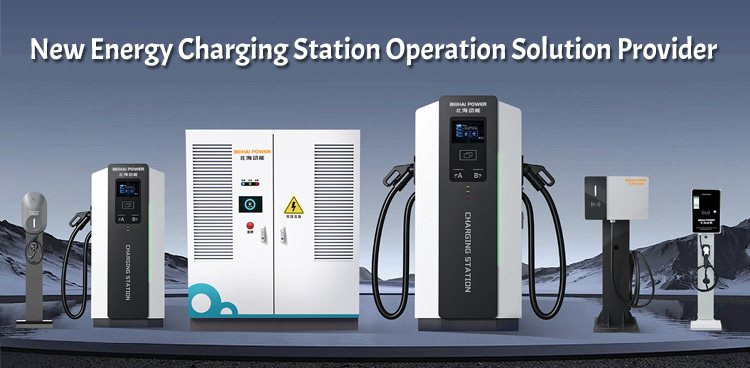
Electric vehicle charging stationsinvolve multiple technical dimensions, including high current, electrical safety, electrical insulation, and temperature management, placing extremely high demands on research and development and manufacturing. Brand-name manufacturers have significant advantages in the following areas: accurate cable specifications (no falsely advertised copper content), high-reliability charging heads and long-life plating processes, rigorous temperature rise, aging, and environmental testing, comprehensive temperature monitoring and protection mechanisms, and a complete safety certification system with traceable quality. Choosing industry-leading brands such asChina Beihai Powerensures that their products undergo systematic electrical safety testing, aging tests, and overall consistency verification, resulting in higher stability and safety, and significantly reducing the risk of overheating and contact problems.
If you have any questions aboutev charging stations or energy storage, or if you need further information, please leave us a message or contact us through the website’s communication information. We will reply to you as soon as possible.
Post time: Dec-19-2025


