
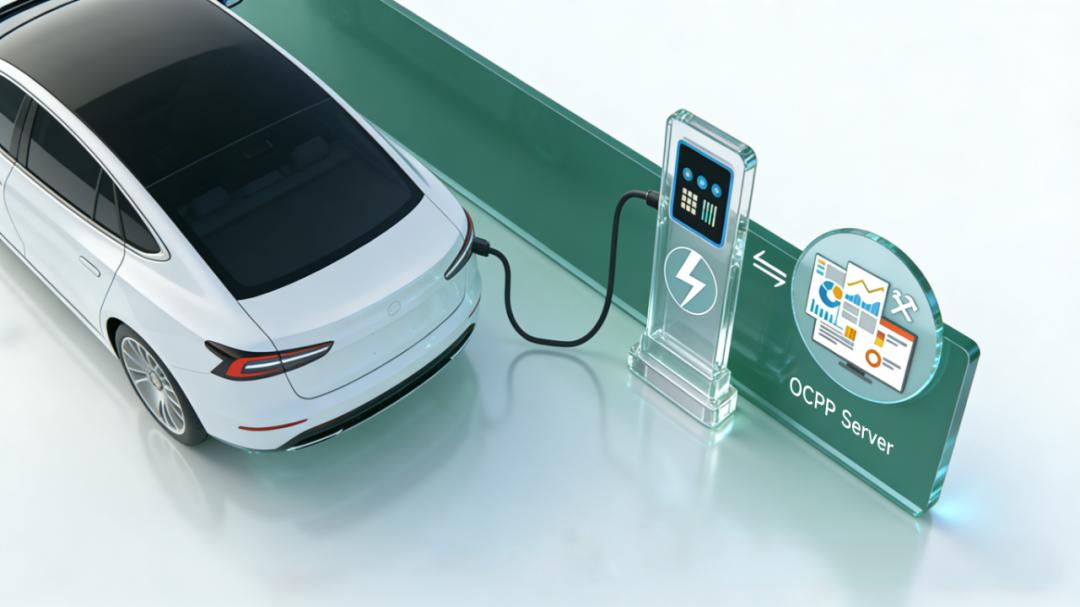
With the rapid development of the global electric vehicle industry, the intelligent and standardized development of charging infrastructure has become an urgent industry need. OCPP (Open Charge Point Protocol), serving as the “common language” connectingev charging stationswith central management systems, is emerging as the key technology to address device interoperability challenges.
I. OCPP: Why Is It Essential for European Market Entry?
OCPP is an open, standardized communication protocol that ensureselectric vehicle charging stations from different manufacturers can seamlessly communicate with any compatible backend management system. Integrating the OCPP protocol equips products with a “standard communication interface,” delivering core value through:
Breaking Interoperability Barriers: Enables charging stations to connect to any third-party operating platform compliant with OCPP standards, enhancing product adaptability;
Compliance with Regulations: Meets mandatory EU interoperability requirements for charging infrastructure, serving as a prerequisite for market access;
Unlocking Smart Features: Supports remote control, charging billing, status monitoring, and OTA firmware updates, significantly reducing upper-layer application development efforts;
Reducing Integration Costs: Utilizes a widely adopted protocol stack, avoiding the custom development and long-term maintenance costs associated with proprietary protocols.
II. MicroOcpp: A Lightweight Solution Optimized for Embedded Devices
For resource-constrained embedded environments, MicroOcpp delivers an ideal OCPP protocol stack implementation with key advantages including:
Ultra-low resource footprint: Written in C/C++ and optimized specifically for microcontrollers and embedded Linux;
Comprehensive Protocol Support: Fully compatible with OCPP 1.6 and supports upgrades to 2.0.1;
Modular Design: Allows compilation of only required features to maximize hardware resource utilization;
Developer-Friendly: Provides clear API interfaces and extensive examples for low integration barriers.
III. Deployment Practice: Building an OCPP Communication System from Scratch
1. Server Environment Setup
Rapidly deploy the SteVe OCPP server using Docker containers. As an open-source central management system, SteVe provides comprehensive charging station management capabilities, including WebSocket communication maintenance, charging status monitoring, and remote control command issuance.
2. Key Client Deployment Steps
During MicroOcpp client deployment on the MYD-YF13X platform, we leveraged the provided Linux 6.6.78 system environment. First, cross-compile the MicroOcpp source library to generate ARM-optimized executables. Next, configure GPIO pins to simulate charging gun connection status: use two GPIO ports to represent status detection for each charging interface.
3. Server-Client Communication Establishment
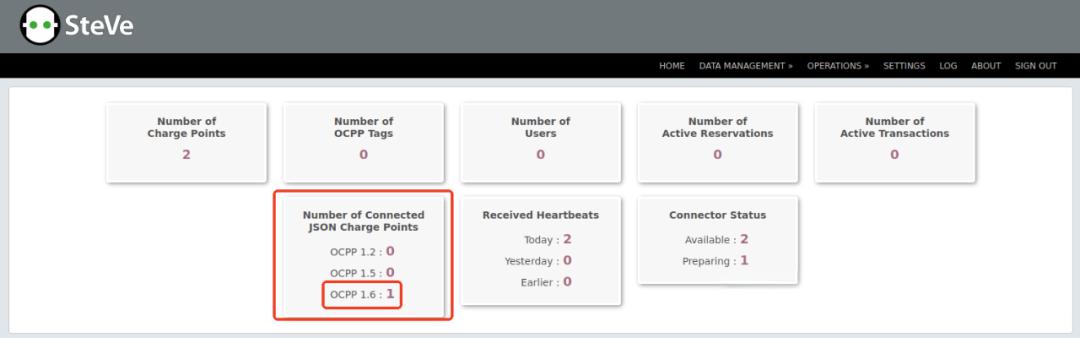
After deployment, the client successfully established a WebSocket connection with the SteVe server:
The server management interface displayed the newly onlineelectric car charging stationin real time, confirming proper underlying link and protocol interaction.
4. Status Reporting Function Verification
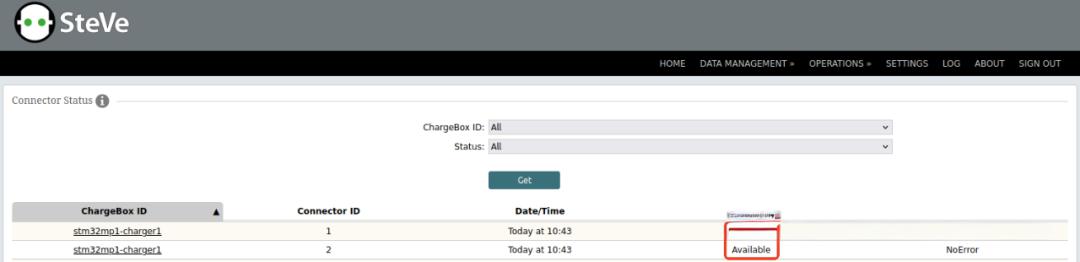
By manipulating GPIO levels to simulate charging gun insertion/removal, we observe the client reporting status changes to the server in real time.
The server interface synchronously updates connector statuses, confirming the entire communication chain functions correctly.
As the globalsmart charging stationmarket continues to standardize, OCPP protocol support has become a key factor in product competitiveness. The comprehensive OCPP solution provided by Mir based on the MYC-YF13X platform not only significantly lowers the development threshold but also ensures product compliance with standards and market adaptability.
Post time: Jan-14-2026


