
Charging process analysis
IEC 62196-3 provides various connection and coupling methods betweenev charging pile plugsandelectric vehicle sockets, along with corresponding descriptions of terminal and material characteristics. In DC charging systems, IEC 61851-1 specifies three operating systems based on different connection methods: system A (AA), system B (BB), and system C (CC-FF, differentiated by maximum output voltage).
China uses the same communication method and requirements as system B.DC fast charging and AC slow charginguse separate sockets, and communication between theDC charging stationand the vehicle is via CAN serial communication.
European and American standards use system C (FF), short for combined charge system. DC and AC are integrated into a single socket. Communication between theelectric vehicle charging stationand the vehicle is via PLC (Power Line Carrier), with high-frequency communication messages coupled to the CP and PE lines for transmission. The communication protocol is ISO/IEC 15118 or DIN SPEC 70121.
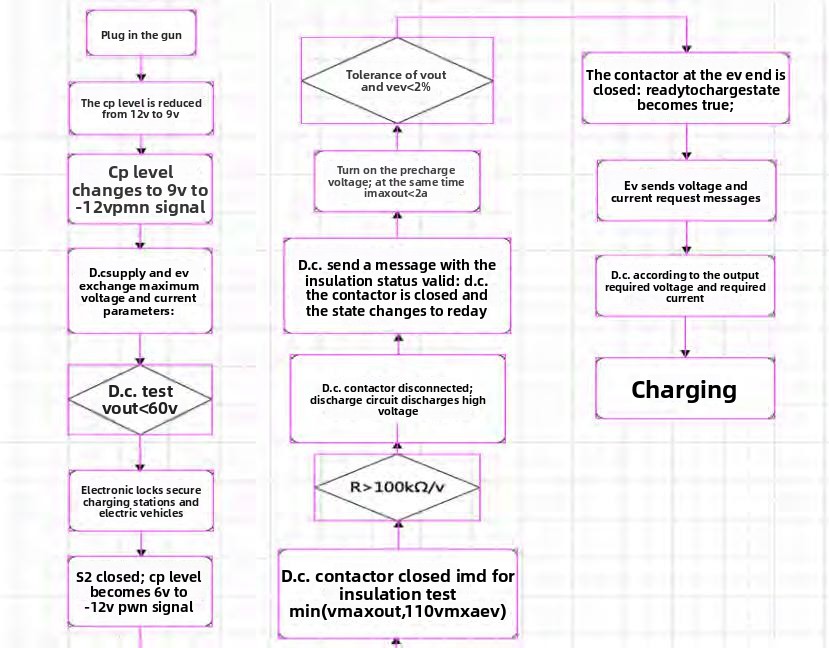
The normal charging process can be divided into four stages: initial connection -> insulation detection & pre-charging -> charging -> end charging. The confirmation and transition of each stage of charging are completed directly or indirectly through the control signal circuit (CP).
Electric Car Charging Phase
The timing sequence for DC charging is described in detail in Annex CC of IEC 61851-23.
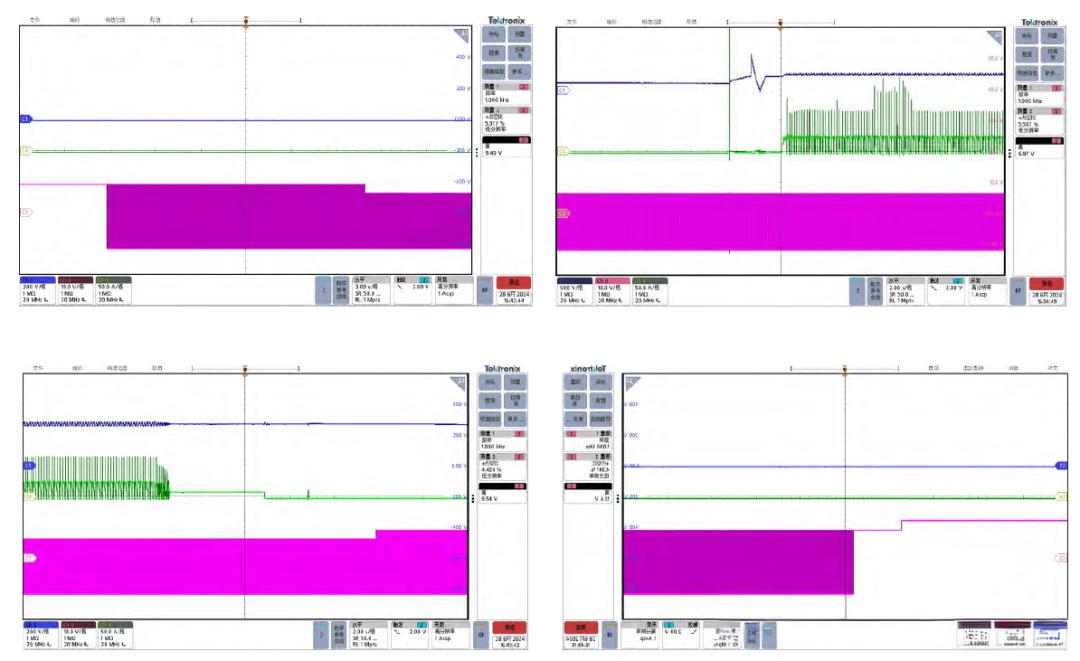
Charging Completion Phase
After charging is complete or the vehicle sends a message requesting to stop charging, theev charging pileshould reduce its output current to below 1A within a specified time. Relay detection and disconnection.
After detecting that the output current has dropped to 1A, the relay will close in two ways:
First:
The relay on the power battery side disconnects first, then theelectric vehicle charging pile’soutput relay disconnects, and the discharge circuit begins to operate. Subsequently, the vehicle’s S2 switch disconnects, and then the electronic lock disconnects until the charging gun is completely disconnected.
Second:
Theev charging station’soutput relay disconnects, the discharge circuit begins to operate, and then the vehicle’s S2 switch disconnects. At this time, the vehicle’s on-board relay is still connected. The relay first closes, then opens, and then closes again, checking if the output voltage matches the battery voltage to determine if the vehicle-side relay is functioning correctly. Then the electronic lock disconnects until theelectric car charging gunis completely disconnected.
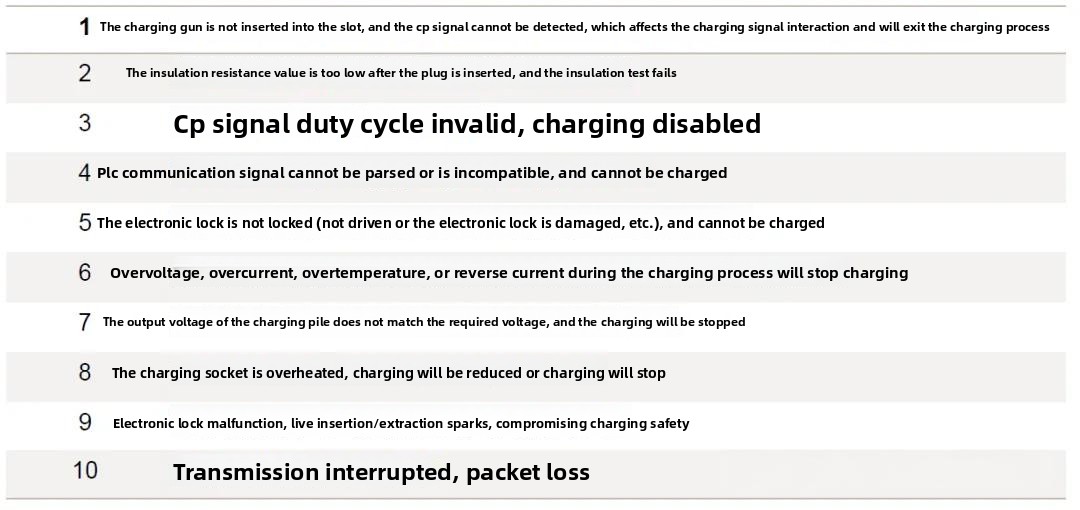
Possible malfunctions during the charging process
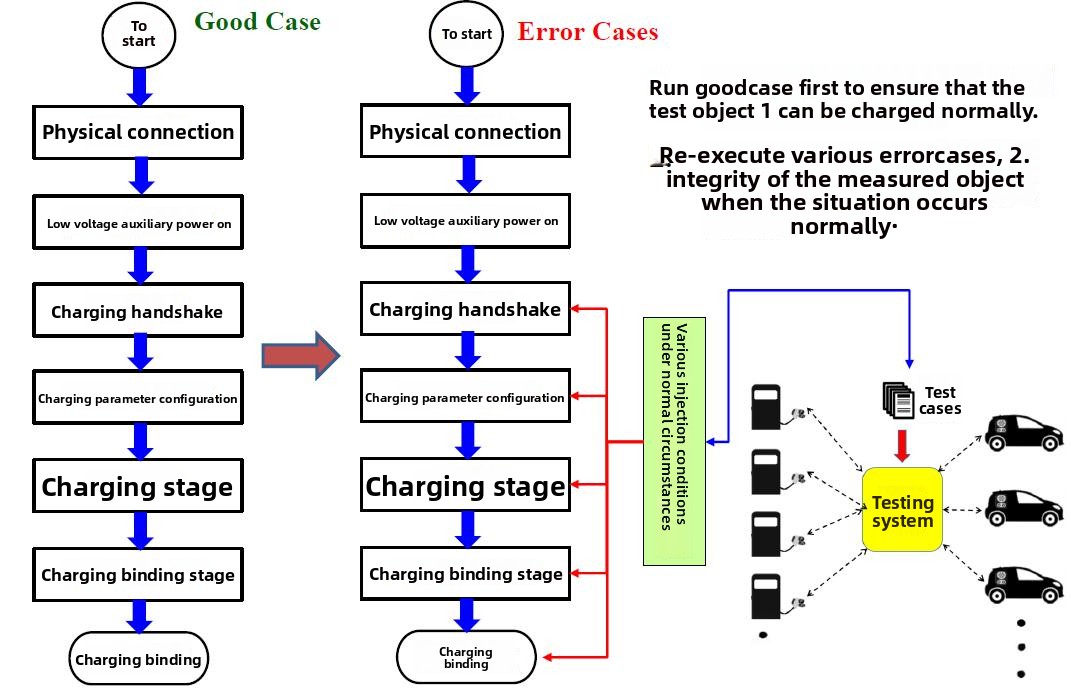
Communication consistency testing (using CCS as an example)

— THE END —
Post time: Dec-26-2025


